


Parenting in the Age of AI
2nd Mar 2026 | Author - Viraj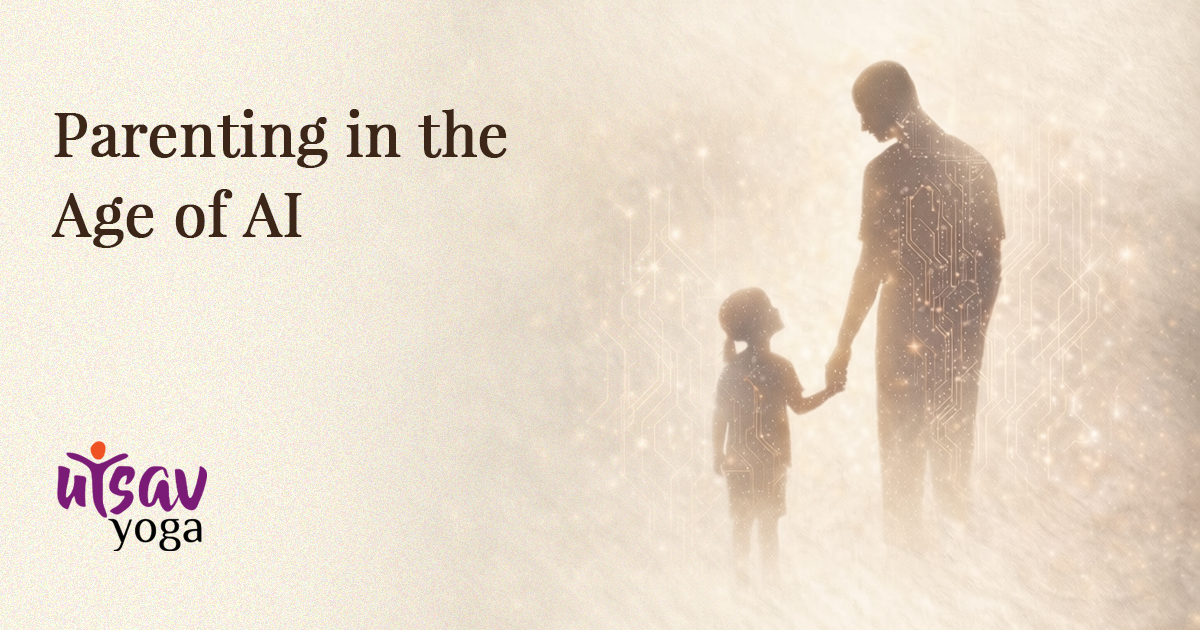
Recently, I watched a video of tech leader Sam Altman speaking at IIT Delhi. He advised young people not to rely too heavily on older
generations for guidance about the future of jobs and technology. His reasoning was simple: it is extremely difficult for those who did
not grow up in a rapidly shifting technological landscape to intuitively grasp how dramatically the world is about to change.
I found myself agreeing with him.
The world of work is about to be fundamentally transformed by AI. It will change not just how work is done, but how people are paid and
valued. With the rise of agentic AI, individual jobs may evolve into small “agencies,” where each professional works alongside multiple AI
agents to deliver faster, smarter, and more efficient outcomes.
It is hard to imagine what the world will look like even five years from now.
And this is precisely where parenting becomes complicated.
Parents naturally feel the urge to guide their children based on their own life experiences. But in a world evolving this rapidly, past
experience may no longer be a reliable map for the future. Often, what we call “advice” is really a projection of our own fears, desires,
and unfinished ambitions.
I have seen this in my own journey.
When I began my career in 1995 in the internet industry, my parents and extended family had no clear understanding of what this field
even represented. There were no structured career paths. No defined opportunities. Yet something within me sensed that this was
where the future was heading.
I learned website design simply because I believed that one day every business would need a website. It was a simple intuition about
direction. That intuitive leap shaped my career. It could not have come from conventional advice.
Today’s children stand at a similar crossroads — only the stakes are higher.
In the age of AI, the ability to think independently, experiment boldly, and trust one’s intuition may matter more than inherited wisdom.
Parents already pass on more than enough — genetics, habits, emotional patterns, strengths, and wounds. Children carry pieces of us
within their DNA and subconscious conditioning. The deeper journey of life, however, is not merely to inherit but to transcend.
A child must eventually free themselves from borrowed beliefs and chart their own path of discovery.
In yogic philosophy, ultimate freedom is described as Nirvana or Kaivalya — liberation from conditioning and attachment. Authentic
yoga is not merely about physical postures; it is about evolving into conscious human beings who live through direct experience rather
than second-hand knowledge.
Perhaps this is where the real work lies — not for children, but for parents.
A parent cannot fully evolve while clinging to control, projecting fear, or imposing identity upon their child. Love must not become
ownership. Guidance must not become confinement.
Most children, by their very nature, carry the energy to forge their own individuality. What they need is not over-direction, but space.
I am reminded of Khalil Gibran’s timeless words in The Prophet:
Your children are not your children.
They are the sons and daughters of Life’s longing for itself.
They come through you but not from you.
And though they are with you, yet they belong not to you.
You may give them your love but not your thoughts,
For they have their own thoughts.
You are the bows from which your children as living arrows are sent forth.
In the age of AI — when even the nature of intelligence itself is being redefined — perhaps the greatest gift a parent can give is not
certainty, but freedom.